Service Dog Training: Skills, Steps, and Expert Guidance
Original publisher: www.allaboutdogtraining.com · Editorial summary
At a glance
Effective service dog training combines careful dog selection, reward-based instruction, gradual exposure, health monitoring, and collaboration with the future handler.
What the article covers
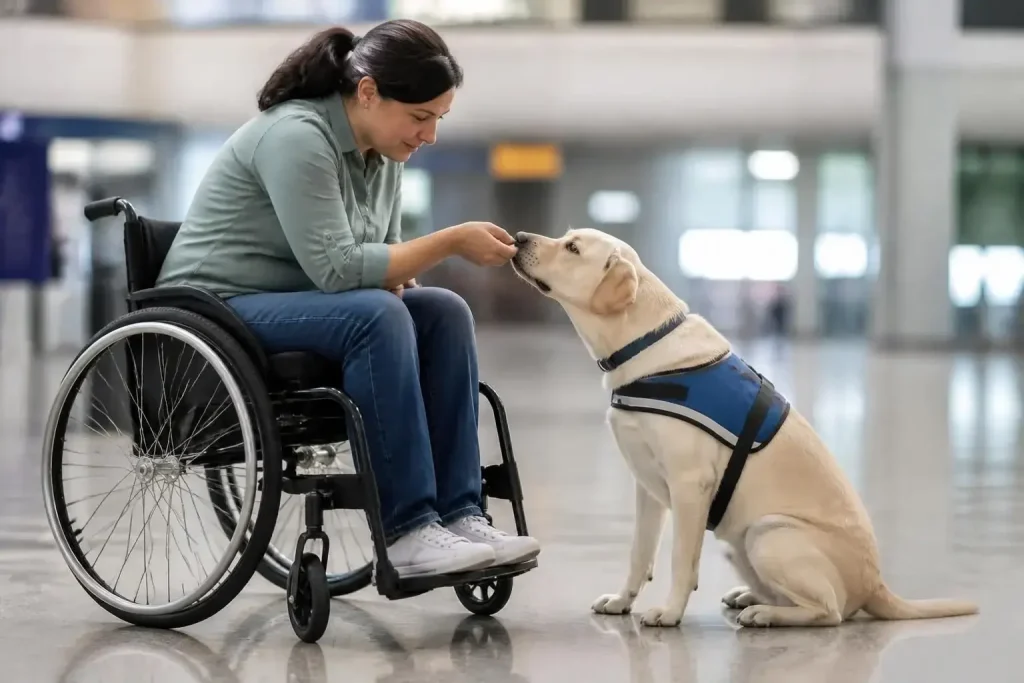
Dogs must learn both public-access behaviors—such as calm settling, loose-leash walking, ignoring distractions, and safe toileting—and specific disability-related tasks that are useful, repeatable, and physically safe. Training should begin with foundational cues, progress through controlled generalization, and break complex tasks into observable steps.
Handlers should track performance, recognize stress or discomfort, and avoid punishment, intimidation, forced exposure, and unsafe physical demands. Not every dog is suitable for service work; fear, aggression, persistent stress, health problems, or limited progress may require changing plans or rehoming the dog as a companion.
Ongoing refreshers, veterinary care, rest, retirement planning, and respect for public-access rules are essential. Legal requirements vary by location, and certifications or purchased registrations may not establish status.
The central goal is dependable assistance that supports the handler while protecting the dog’s welfare, comfort, and long-term health.
Read the full article
Explore the original publisher’s article for the full context and details.
This publisher-provided summary may be AI-assisted. Automated content screening is not an independent factual review.
More from this publisher